Tyler Najera
Tyler Steven Najera
He/himLas Vegas, NV, United States
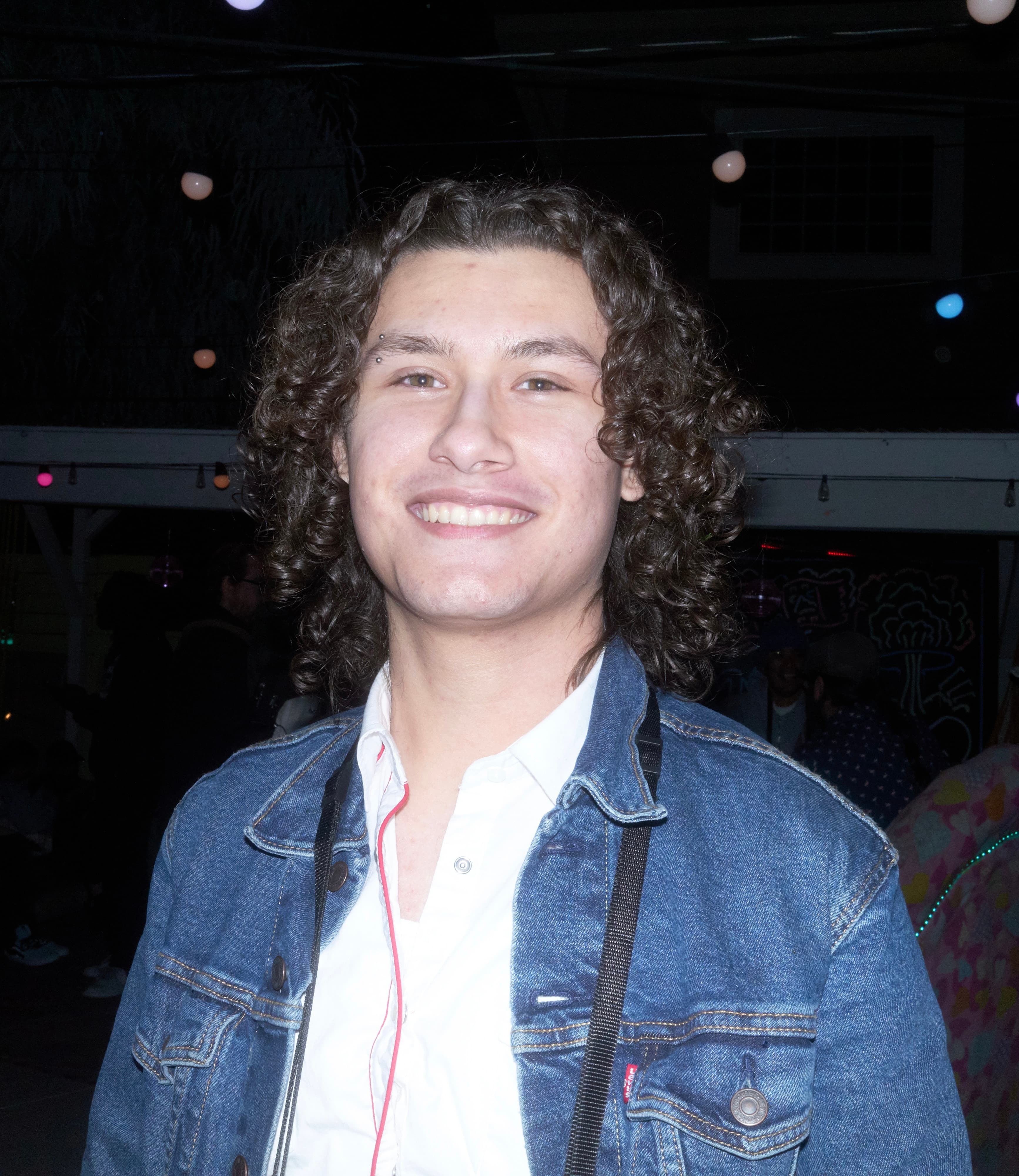
Tyler Steven Najera was born on September 7th, 2004 in Chicago, Illinois, USA. After being kicked out of both Catholic and Hebrew school as a toddler, Tyler was diagnosed with ADHD. With a love and passion for film ingrained in Tyler at a young age, he began making home movies on Super 8. Beginning to make movies on film in the digital age was something that deeply informed and shaped Tyler’s approach and philosophy as a director and it would certainly show up again in his later work with his preference to shooting on 16MM film. When Tyler was 7, he and his family moved to Las Vegas, Nevada. He graduated from Del Sol High School with a magnet certificate in Cinematic Arts in 2023. Tyler received the Bunker Hill Fine Arts Scholarship to attend UNLV where he currently studies film. In 2026 Tyler won The Clark Grant.
When Tyler was 17, he wrote and directed the short film PORTRAIT OF MICHAEL VOGLER (2021). It won the Rising Star (Best Student Film) Award at the Sin City Horror Fest.
Some of Tyler’s favorite films and biggest influences are Scorpio Rising (1964), Rosemary’s Baby (1968), Eraserhead (1977), Crash (1997), Chinatown (1974), Persona (1966), Hour of the Wolf (1968), Cries & Whispers (1972), 3 Women (1977), Soy Cuba (1964), and The Man Who Fell to Earth (1976).
Statement
In late January of 2020, while I was a freshman in high school, I began pre-production on a short film that would later go through a metamorphosis. The film was to be shot on Super 8 (at the time, Super 8 was all I knew). It had the same scenario: a boy on a staircase at night, and the inescapable image of a figure in a black latex suit. Obviously, because of COVID, this vision of mine fell through. And for the next few years, these images stayed with me and would later be the threads that would become HOUSE OF DEATH.
After high school, I got a fine arts scholarship to attend UNLV for film. My freshman year adjusting to college life was rough. In my classes and among my peers, I felt like an outsider, and it was hard for me to make friends. I did well in my film classes, and I got along great with my professors, but I found that they were some of the few people on campus that I could relate to and talk about movies with. Talking with other students about film and in classes made me self-conscious because they didn't share the same amount of love or enthusiasm as I did. I worried that they found me annoying and thought I was pompous. During the spring semester that year, I started to get heart palpitations in class - my anxiety consumed me.
While pondering these feelings one day after class in the library, I decided I needed to channel these feelings into something. In that moment, I couldn't talk - I was going non-verbal over this feeling. That's when I remembered those images of the boy on the staircase and the black latex figure. That night, I went home, and I wrote what would be HOUSE OF DEATH. I teamed up with my longtime friend and producing partner, Giselle Baltazar Mojica, to help me on this project. With our combined years of indie-micro budget filmmaking, we decided to shoot the film on 16MM.
I envision HOUSE OF DEATH as a surreal and eerie cinematic experience. Uniquely photographed, I see the picture resembling a JEAN ROLLIN film, as provocative as SCORPIO RISING, sound as booming as ERASERHEAD, as puzzling as MOTHLIGHT, and space liminal like THE SHINING. HOUSE OF DEATH is a film that audiences will talk about. Some will be scratching their heads afterwards. But once they see this film, they will never forget it.
Selected Work
2026

House of Death
2026·Short·5m 15s
Director